

Flat & commercial roofing built for Mississauga
Low-slope roof systems, repairs and full replacements across Mississauga neighbourhoods and nearby Brampton and Oakville
Free estimates · Same-day service available · No obligation
Flat & commercial roofing in Mississauga
Flat & commercial roofing requires a different approach than steep-slope residential systems. Mississauga’s neighbourhoods—whether industrial areas near the Port Credit corridor or low-rise commercial strips—face ponding, freeze-thaw cycles, and heavy snowfall. Mississauga Roofers focuses on low-slope membranes, drainage strategy, and seam integrity to extend service life and avoid recurring leaks.
What this service covers
We install and repair common low-slope systems: thermoplastic polyolefin (TPO), ethylene propylene diene monomer (EPDM), and modified bitumen. Coverage includes membrane replacement, seam welds or adhesive seams, tapered insulation for drainage, scupper and overflow detailing, and roof-top equipment curbs. For commercial sites we also handle traffic-rated surfacing and pedestrian access routes.
When you need immediate work versus a temporary fix
Active leaks; sagging decks; large areas of membrane delamination; or compromised seams around curbs and penetrations require immediate intervention to prevent interior damage. Smaller seam failures, isolated ponding that drains with minor re-profiling, or single flashing splits may be appropriate for targeted repairs as an interim measure. We explain which approach limits interior damage while considering budget and asset life.
Why acting early saves money
Addressing seam separation or blocked drains before repeated freeze-thaw cycles create secondary rot reduces the chance of structural repair. Early intervention limits insulation wetting and the need to remove and replace substrate boards—both major cost drivers. Proactive maintenance also preserves warranties and extends the membrane’s expected service life.
How local conditions affect choices
Mississauga’s climate includes wet springs, warm summers, and freeze-thaw periods that stress low-slope roofs through expansion, contraction, and ponding water. Salt exposure near lakeshore areas accelerates metal corrosion around drains and scuppers. We adjust material selection and detailing—membrane type, fastener patterns, and edge metal design—based on site exposure and expected loads.
Request a no-obligation flat roof assessment by email
Email Us for a Free EstimateWhy Choose Mississauga Roofers for Flat & commercial roofing
We structure projects around methodical assessment, documented scope, and workmanship that addresses known failure modes for low-slope systems. Our focus is on measurable outcomes: secure seams, predictable drainage, and durable flashings.
Detailed written quotes
Every project begins with a written scope describing materials, seam methods, insulation strategy and drainage actions. That specification reduces surprises and clarifies what triggers additional work on discovery.
No hidden fees
Our proposals list allowances for potential replacement items—like wet insulation—so owners understand cost drivers before work begins. Change orders are documented and approved in writing.
Dedicated job-site protection
We set up pedestrian protections, reserve routes for equipment, and protect finish surfaces to reduce secondary damage during roof work. Daily cleanup and debris containment are standard on every project.
Local Mississauga crews
Our teams are local to Mississauga and familiar with neighbourhood access, seasonal logistics and common roof assemblies in Peel County and nearby Oakville. That local knowledge shortens mobilization and informs choices like membrane type and flashing details.
Workmanship guarantee
We document quality-control checks—nondestructive seam testing where appropriate and inspection records for drains and flashings—and provide a workmanship guarantee with each reroof. Guarantees are paired with the specified maintenance actions owners must follow to keep coverage valid.
Clear communication
We maintain a single email contact for project documentation, change approvals and scheduling to ensure a clear paper trail and timely decisions. That helps building managers and homeowners plan around work windows and inspections.
Signs You Need Flat & commercial roofing in Mississauga
These are the symptoms we commonly see in Mississauga that indicate the underlying failure mechanisms of low-slope roofs. Each item links what you see on the roof or inside the building to the probable cause beneath the membrane.
Standing water after rain
Ponding more than 24–48 hours indicates inadequate slope, blocked scuppers/drains, or compressed insulation under the membrane. Prolonged ponding accelerates seam stress, promotes edge creep and leads to membrane fatigue and tears.
Recurring interior stains
Stains that reappear after precipitation typically mean moisture is migrating through compromised seams, flashings, or through saturated insulation layers. Left unchecked, this moisture creates mould risk and degrades roof deck or structural sheathing.
Split or open seams
Visible seam separation on TPO, EPDM or modified bitumen points to adhesion or welding failure, often from thermal cycling or poor original detailing. Open seams allow rapid water ingress down to insulation and deck layers.
Soft or spongy deck areas
Compressible areas when walking the roof or probing the insulation mean insulation saturation or rot in the deck; this reduces load capacity and often mandates removal and replacement of insulation and substrate.
Blistering or buckled membrane
Blisters can form from trapped vapour or poor adhesive contact during installation and indicate potential delamination between membrane and substrate. Buckling shows thermal movement without adequate relief, often at large uninterrupted roof areas.
Damaged flashings at parapets or curbs
Failing flashings around parapets, curbs and rooftop equipment are common leak paths; UV exposure and mechanical damage accelerate deterioration. Properly detailed metal or membrane flashings with secure termination bars prevent water tracking inside assemblies.
Rust or corrosion at metal drains
Corroded drains and scuppers can restrict flow and permit leaks at their junctions; they also signify long-term moisture exposure. Replacing drain bodies and ensuring watertight clamping assemblies restores reliable drainage.
Rapid temperature-driven leaks
Leaks that occur only during warm weather often come from thermal movement opening compromised seams or flashing transitions. Design changes—like flexible transition membranes and relief at corners—address these mechanisms.
What to Consider Before Booking Flat & commercial roofing
Is my issue a repair or a full replacement?
Assess whether problems are isolated (single seam, one flashing, or a local puncture) or widespread (multiple open seams, saturated insulation, or general membrane embrittlement). A focused repair is appropriate for isolated failures when the rest of the membrane and insulation test sound. When several systems components fail or insulation is wet across sections, a planned replacement prevents repeated service calls and hidden damage escalation.
How should I budget for this work?
Budget based on system scope: membrane type (single-ply versus modified bitumen), whether insulation replacement is required, and drainage upgrades. Include an allowance for discovered conditions such as wet insulation or structural repairs; those are the most common reasons a job expands beyond initial estimates. Prioritise a written quote that itemises allowances so you can compare proposals fairly.
When is the best season to schedule?
In Mississauga, spring through early fall gives the most predictable conditions for adhesion, welding and curing; very cold weather impairs welding of thermoplastic membranes and slows adhesives. However, urgent repairs happen year-round—if a winter leak threatens interiors we provide temporary containment and plan a permanent fix when temperatures permit proper installation methods.
How will the work disrupt building occupants?
Expect some rooftop activity, staging of materials, and occasional short access restrictions—for both residential low-slope assemblies and multi-tenant commercial buildings. We plan work sequences to isolate rooftop equipment and maintain safe access and will schedule noisy or intrusive phases to limit operational impact where possible. For commercial properties we coordinate with property managers on service windows and safety protocols.
What materials should I lean toward?
Consider the building’s exposure, rooftop use, and lifetime goals. Single-ply membranes like TPO offer heat-welded seams and reflectivity, EPDM provides long-term elasticity and good performance in repairs, while modified bitumen gives a multi-layered membrane with good abrasion resistance. Material choice should match expected traffic, rooftop equipment layout, and local climate considerations for Mississauga.
Do I need permits or inspections?
Most Mississauga reroofs and significant modifications that affect structural loads, roof access, or fire separation will require municipal permits and inspections; small repairs often do not. We advise checking with the City of Mississauga building department and include permit coordination in our full proposals when required.
How much does Flat & commercial roofing cost in Mississauga?
Cost depends on several factors: roof area and geometry, membrane selection (TPO, EPDM, modified bitumen, or built-up), whether insulation or the deck must be replaced, access and logistics on site, and seasonality for scheduling. Hidden-cost drivers are usually discovered conditions such as saturated insulation, deck repair or required curb upgrades. We provide a written quote after assessment that lists allowances so you can see what’s fixed-price and what is conditional.
How long will the project take?
Timelines vary with scope: small repairs can be completed in a day or two, while full recover or reroof projects take several days to weeks depending on building size and weather. We schedule around favourable conditions for the chosen membrane—thermoplastic welding requires dry, warmer conditions—plus permit review time if municipal approvals are necessary.
Which membrane is best for my building?
TPO offers weldable seams and reflective finish good for energy control; EPDM provides elasticity and strong patchability for repairs; modified bitumen suits roofs needing abrasion resistance and can be layered for redundancy. The best choice depends on rooftop traffic, expected service life, budget, and the building’s exposure in Mississauga’s climate.
Do I need permits and inspections?
Major reroofs, changes in structural loading, or work affecting rooftop egress and fire separations typically require permits and inspections from the City of Mississauga. Small repairs often do not, but we include permit coordination in proposals when scope warrants municipal filing and inspection scheduling.
What warranty or guarantee comes with the work?
We provide a workmanship guarantee tied to documented maintenance requirements; material manufacturers may provide separate material warranties that vary by membrane type. We deliver installation records and maintenance guidelines so warranty conditions are clear and supportable.
How should I prepare my building?
Provide rooftop access instructions and identify any scheduled equipment service windows so we can coordinate safe isolation. Remove loose rooftop items and notify tenants of potential short-duration disruptions during noisy work phases; we handle protection of rooftop HVAC and other equipment where possible.
Why do quotes differ between contractors?
Differences stem from scope detail—whether insulation removal is included, the seam method specified (heat-weld vs adhesive), allowance amounts for discovered conditions, and the quality of finishing details around penetrations. Compare written scopes, not just totals, to understand what each contractor includes and excludes.
Our Flat & commercial roofing Process in Mississauga
We follow a documented process built to identify failure mechanisms, specify corrective assembly work, and document the outcome for property managers and owners in Mississauga.
- 1
Comprehensive assessment
We inspect the membrane, flashings, drains and insulation; probe suspected soft spots and document ponding patterns and equipment penetrations. Photographs and moisture-scan notes become part of the assessment report so decisions are evidence-based.
- 2
Written scope & specification
We prepare a detailed proposal showing membrane type, seam method (heat-weld, adhesive, or torch-free), insulation strategy (recover or remove), and drainage corrections like tapered insulation or scupper enlargement. The scope lists allowances for discovered conditions such as saturated insulation or deck repairs.
- 3
Scheduling & permit coordination
We handle permit submissions to the City of Mississauga when required and set a work window aligned with weather constraints for the chosen membrane system. We confirm staging areas, rooftop access, and tenant notifications as part of project mobilisation.
- 4
Execution with site protections
During work we implement fall protection, dust and debris containment, pedestrian controls and dedicated waste chutes where possible. Installation follows methodical seam control, termination bar anchoring, and secure flashing integration to adjacent walls and equipment curbs.
- 5
Quality checks & cleanup
We perform seam inspections, adhesion checks and drain flow tests before demobilising; daily cleanup and final debris sweep are standard. Any replaced insulation or substrate is documented and disposed of per municipal guidelines.
- 6
Final walkthrough & documentation
We conduct a final walkthrough with the owner or manager, hand over as-built photos and invoices, and provide maintenance recommendations to preserve the new system. This handover includes the workmanship guarantee and its care conditions.
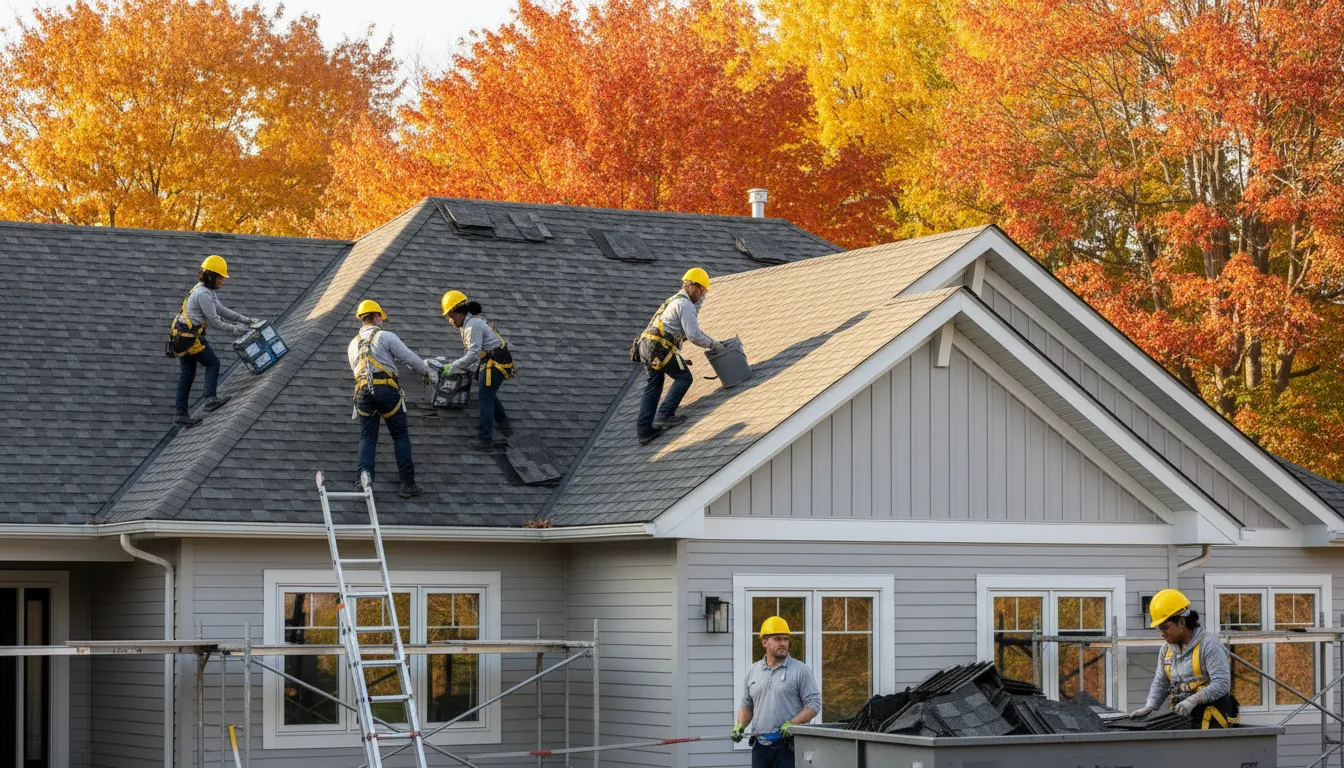
Professional Flat & commercial roofing Built for Mississauga Conditions
Mississauga’s building stock, weather patterns and municipal requirements shape how we specify Flat & commercial roofing systems. We balance thermal control, moisture management and long-term resilience in each recommendation. Our specifications reflect the city’s freeze–thaw exposure, anticipated rooftop loads and local practices in Peel County and nearby Oakville.
Ontario climate stresses and solutions
The region experiences cold winters and thaw cycles that concentrate stress on seams and flashings; membranes must accommodate thermal contraction and expansion. We prefer welded or properly sealed seams and design for positive drainage with tapered insulation to limit ponding. Vapour control layers and roof assembly sequencing are selected to prevent trapped moisture that causes blisters and insulation failure.
Local housing and commercial stock considerations
Mississauga includes low-rise commercial plazas, multi-unit residential buildings and flat-roofed residential additions—each with different rooftop traffic and equipment needs. For retail plazas we emphasise trafficable surfacing and durable edging; for residential flat roofs we specify detail work at eavestroughs and scuppers to prevent backsplash into cladding. Equipment loads and access routes are planned to minimise future membrane punctures.
Permits, code and municipal coordination
We prepare documents aligning with common City of Mississauga permit expectations for structural and fire separation changes and coordinate inspections where required. Our proposals note when roof changes affect egress, rooftop mechanical clearances, or fire-rated assemblies so you can anticipate municipal review timelines.
Standards and workmanship controls
Work follows accepted low-slope assembly practices—proper overlap, termination bar use, compatible sealants and cured adhesive schedules—paired with visual and nondestructive seam verification. We document each stage so owners in Mississauga have a paper trail for warranty claims and future maintenance planning.
Weather is hard on your roof — email us for a same-day inspection.
Fall roofing conditions in Mississauga, ON
Fall is the critical prep window around Mississauga, ON: clear gutters, reseal flashing, and fix loose shingles before freeze-thaw and snow load arrive.
Proudly Serving Mississauga, ON
Local, on-time service throughout Mississauga and the surrounding area.